The Sacraments
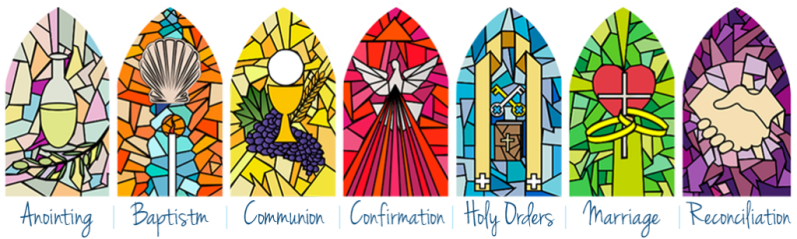
The Seven Sacraments
The seven sacraments are sacred rites through which Christians experience God's grace. They are visible signs of God's invisible presence, instituted by Christ and entrusted to the Church. Through the sacraments, believers are strengthened in faith, nourished spiritually, and encouraged to live lives of love and service.
1. Baptism
Baptism is the first sacrament of Christian initiation. Through water and the invocation of the Holy Trinity, a person is welcomed into the Christian community and begins a new life in Christ. Baptism signifies cleansing from sin, rebirth, and becoming a member of the Body of Christ.
Meaning:
-
Entry into the Christian faith.
-
New birth through water and the Holy Spirit.
-
Membership in the Church.
2. Confirmation
Confirmation strengthens the grace received in Baptism through the gift of the Holy Spirit. It equips Christians to live their faith with courage, wisdom, and commitment, empowering them for Christian witness and service.
Meaning:
-
Strengthening by the Holy Spirit.
-
Growth in Christian maturity.
-
Commitment to discipleship and mission.
3. The Holy Eucharist
The Eucharist is the heart of Christian worship. In the celebration of the Lord's Supper, Christians remember Christ's sacrifice and share in his presence through the consecrated bread and wine. It is a sacrament of thanksgiving, communion, and spiritual nourishment.
Meaning:
-
Participation in Christ's saving work.
-
Spiritual nourishment.
-
Unity with Christ and one another.
4. Reconciliation (Confession)
The Sacrament of Reconciliation offers God's forgiveness and healing. Through confession, repentance, absolution, and amendment of life, believers are restored to a right relationship with God and with the Christian community.
Meaning:
-
God's mercy and forgiveness.
-
Spiritual healing.
-
Renewal of the Christian life.
5. Anointing of the Sick
The Anointing of the Sick is offered to those experiencing serious illness, frailty, or approaching the end of life. Through prayer and the anointing with blessed oil, the Church asks God to grant healing, strength, comfort, and peace.
Meaning:
-
Spiritual comfort.
-
Healing and hope.
-
God's presence in times of suffering.
6. Holy Orders
Holy Orders is the sacrament through which individuals are ordained for ministry as deacons, priests, or bishops. Those ordained are called to serve God's people through preaching, sacramental ministry, pastoral care, and leadership.
Meaning:
-
A vocation of service.
-
Leadership in the Church.
-
Proclamation of the Gospel and celebration of the sacraments.
7. Holy Matrimony
Holy Matrimony is the lifelong covenant between two people who freely commit themselves to one another in love, fidelity, and mutual support. In many churches, it reflects Christ's faithful love for the Church and is a vocation of shared discipleship.
Meaning:
-
Lifelong covenant of love.
-
Mutual support and faithfulness.
-
A witness to God's love in the world.
The Sacraments and Christian Life
The seven sacraments accompany Christians throughout every stage of life—from birth and initiation into the faith, through spiritual growth, healing, vocation, and committed relationships. They remind us that God continues to work through ordinary signs—water, oil, bread, wine, touch, words, and human relationships—to reveal extraordinary grace.
Together, the sacraments nurture faith, build up the Church, and strengthen believers to love God and serve their neighbours with compassion, justice, and hope.
We have an open altar policy meaning everyone can receive the sacraments.
To enquire about the sacraments please email: